
Canoeing and Kayaking the Upper Central Grand River: Launch Points, Routes, and Logistics in Waterloo Region
If you only know Kitchener-Waterloo from behind the steering wheel on Highway 85 or navigating the commercial corridors of King Street, you are missing half the region.
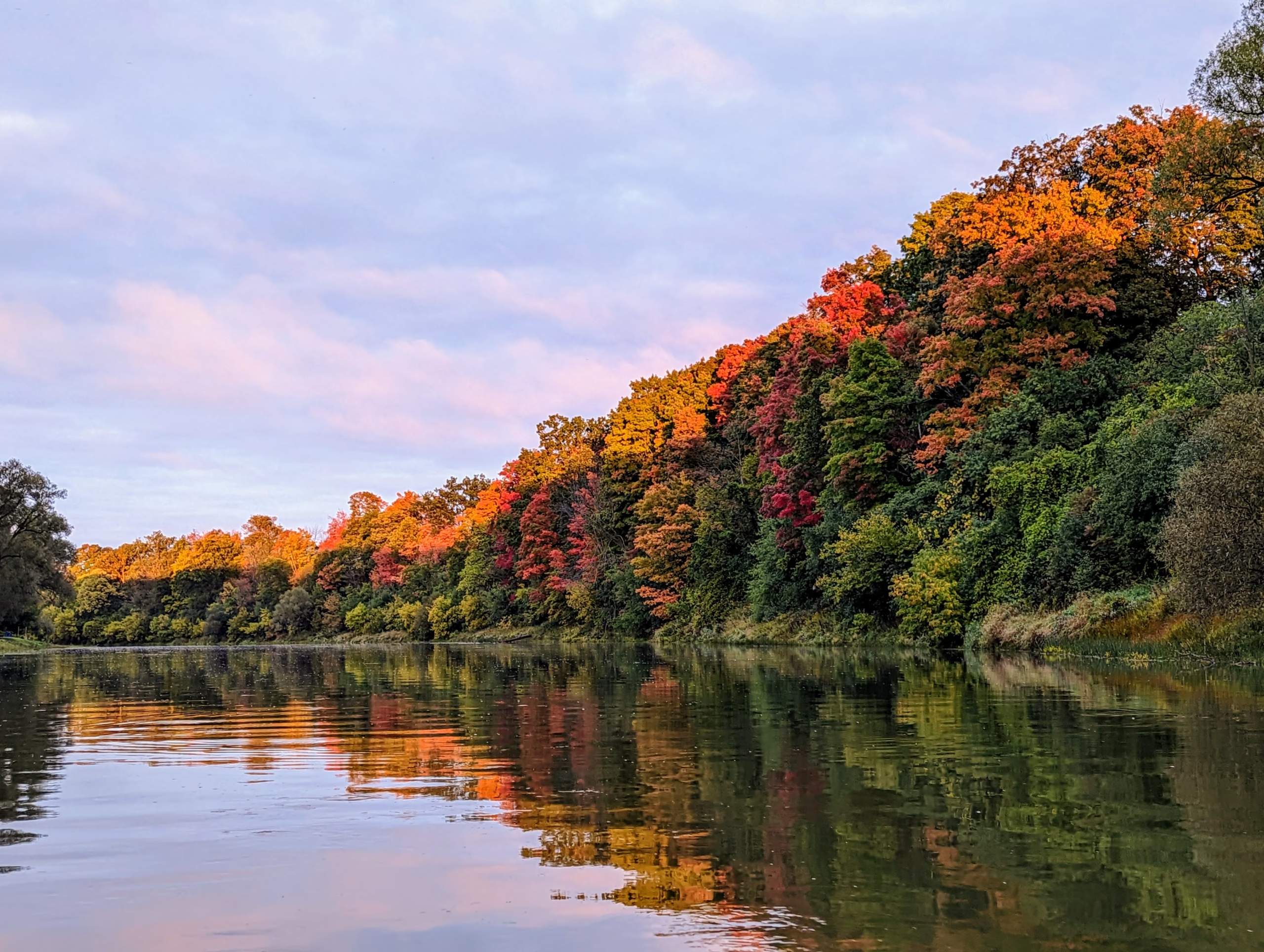
Down in the valley, running beneath the shadows of limestone cutbanks and towering Carolinian hardwoods, the Upper Central Grand River cuts directly through the northern half of Waterloo Region. The moment your hull slides into the current, the urban sprawl drops away. The high banks muffle traffic hum, silver maple canopy arches overhead, and the background shifts to the rattle of belted kingfishers and the steady wash of water tumbling over shallow limestone riffles.

Paddling Waterloo Region divides naturally into two distinct chapters: the northern reach, stretching from the Conestogo confluence down through Waterloo and Kitchener to Bingemans; and the lower reach, which picks up through Otterbein, Schneider Creek, Freeport, Moyers Blair Landing, and down into Cambridge at River Bluffs.
For quick morning runs, after-work paddles, and scenic day trips, the northern corridor offers some of the cleanest gravel bars, swiftest riffles, and quietest stretches in the county. Here is the breakdown of the northern launch points, access routes, and outfitter logistics along the Upper Grand River.
Northern Waterloo Region Launch Points & Access
The northern stretch features a string of public river accesses alongside dedicated outfitter landings:
- Conestogo Village / GRCA Access #7: Located on river left just above the confluence of the Conestogo and Grand Rivers, off Regional Road 17 (Golf Course Road). This is the northern gateway to the urban corridor. Putting in here gives you a long, rural warmup run through pastoral farmland and sweeping gravel shallows before entering the city limits.
- Kaufman Flats (Waterloo): Located east off University Avenue East, north of Lexington Road. Parking is directly adjacent to the Walter Bean Trail. The launch is a gradual, low-angle shoreline directly opposite the protected wetlands of Snyder’s Flats. It is the most popular public put-in for the mid-valley run.
- Kiwanis Park (Kitchener/Waterloo Border): Situated off Woolwich Street, Kiwanis Park provides foot access down to the river via trail paths running through the park grounds. While it requires a bit of a haul with a canoe or kayak, it serves as a quiet mid-point launch between Conestogo and Bingemans.
- Bridgeport / Joe Thompson Sportsfield (Kitchener): Located off Bridge Street East on river left. Paddlers park in the sportsfield lot, carry gear up the flood-control dike ramp, and follow the footpath down to the shoreline right at the Bridge Street Bridge footings.
- Riverbend Drive Access: A secondary municipal access off the Walter Bean Grand River Trail near the end of Riverbend Drive. It sits just upstream of the old People’s Railway bridge piers.
- Bingemans Landing (Private Outfitter Base): Located inside Bingemans at 425 Bingemans Centre Drive. Situated on river right well upstream of the Victoria Street and Highway 7 bridges, this is the private operating river base for Grand Experiences. It offers secure parking, dock facilities, equipment outfitting, and direct shuttle departures.
- Stanley Park Optimist Natural Area / J.A. Pollock Family Trailway Access: A municipal shoreline launch located on river right along the trailway, tucked just upstream of the Victoria Street and Highway 7 bridges. It offers a convenient, low-profile public take-out point before the river flows beneath the highway corridors.
The Classic Northern Routes
1. The Conestogo Run: Access Point #7 to Kaufman Flats
- Distance: ~10 km
- Paddling Time: 2.5 to 3 hours
- Skill Level: Intermediate (seasonal low-water navigation)
- Craft: Canoe or Kayak
Launching just below the confluence where the Conestogo River rolls into the Grand, this trip feels completely separated from the surrounding cities. The river winds past sweeping dairy farms, limestone ledges, and quiet conservation parcels. You will pass the riverbanks of the Grey Silo Golf Course before opening into the wider gravel channels around Snyder’s Flats, pulling out on river right at Kaufman Flats. In dry mid-summer weeks, this reach runs shallow—expect to read the water carefully to stay in the deepest tongue.
2. The Heritage Run: Kaufman Flats to Bingemans
- Distance: ~10 km
- Paddling Time: 2.5 to 3 hours
- Skill Level: Beginner to Intermediate
- Craft: Canoe or Recreational Kayak
The definitive half-day trip on the Upper Grand. Launching from Kaufman Flats, you immediately slip between the gravel bars fronting Snyder’s Flats. The current here is lively and clear, carrying you over clean cobblestone swifts toward Bridgeport.
After sliding beneath the concrete arches of Bridge Street, you round a broad horseshoe bend past Riverbend Drive. Rising out of the water are the massive, weathered concrete bridge piers of the old People’s Railway (the Berlin & Northern Railway). Paddling between these silent stone monoliths—known locally as the “Ghost Bridge”—offers a raw view into the electric transit lines that tied these communities together over a century ago.
Past the piers the river flows along a quiet, tree-lined corridor through eastern Kitchener, pulling out smoothly at the private Grand Experiences landing inside Bingemans.
3. The Evening Swift: Bridgeport to Bingemans
- Distance: ~3.5 km
- Paddling Time: 1 to 1.5 hours
- Skill Level: Novice / Family Friendly
- Craft: Canoe, Kayak, or River Tube
When you want an easy post-work float or a stress-free introductory paddle with children, this short run cuts out the logistics strain. Launching from the Bridgeport dike at Joe Thompson Sportsfield, you ride the swifts past the People’s Railway piers and cruise downstream to our private landing at Bingemans.
Navigating the Upper River: What to Watch For
The Upper Grand through Waterloo and North Kitchener is primarily Class I moving water, but small river hydrology requires active attention:
- Spotting the Downstream “V”: The channel shifts frequently between spring freshets. Look downstream for smooth, dark water arranged in a downward-pointing “V”—that indicates your deepest water channel. An upward-pointing “V” with foaming ripples marks a shallow gravel shelf or a submerged limestone slab.
- Handling Low Summer Water: By July and August, the riffles between Conestogo, Kiwanis, and Bridgeport can become thin. Keep your boat trimmed level, avoid sudden steering shifts in the shallows, and drop to your knees to lower your center of gravity and pick up boat feel if you scrape a gravel bar.
- Cutbanks and Outside Bends: Spring high water constantly topples dead timber into the river along the outside cuts. Fallen willows and deadfall act as strainers. Always favor the inside radius of river bends, where the water is slower, deeper, and free of entanglements.
Hassle-Free River Trips: Ditching the Two-Car Shuffle
The biggest roadblock to paddling the Grand has always been the two-car shuffle: driving out to the takeout to drop a vehicle, driving back to the put-in in a second car, and repeating the whole process in reverse with wet gear and muddy boots at the end of the day.
While Grand Experiences is not a standalone taxi or shuttle service for personal gear, we eliminate the two-car headache entirely through our complete, self-guided rental adventures departing from our Kitchener river base at Bingemans:
- The Urban Float & The Heritage Run: Both packages are fully turnkey. We provide the boat (canoe or recreational kayak), paddles, fitted PFDs, and required marine safety kits, along with your upstream passenger shuttle to the launch.
- Park Where You Finish: You arrive directly at the Grand Experiences pavilion inside Bingemans, park in our dedicated lot, and get fitted for your gear.
- Shuttle to the Launch: We drive your group upstream to the launch—putting in at Bridgeport for The Urban Float (~3.5 km) or up at Kaufman Flats for The Heritage Run (~10 km).
- Paddle Back to Your Car: You spend the day floating downriver at your own speed with the current at your back. When you reach the landing flags at Bingemans, you pull ashore, hand off the equipment to our crew, and walk straight to your vehicle—no waiting on riverbanks, no coordinating rides, and no strapping wet hulls to roof racks at the end of the day.