
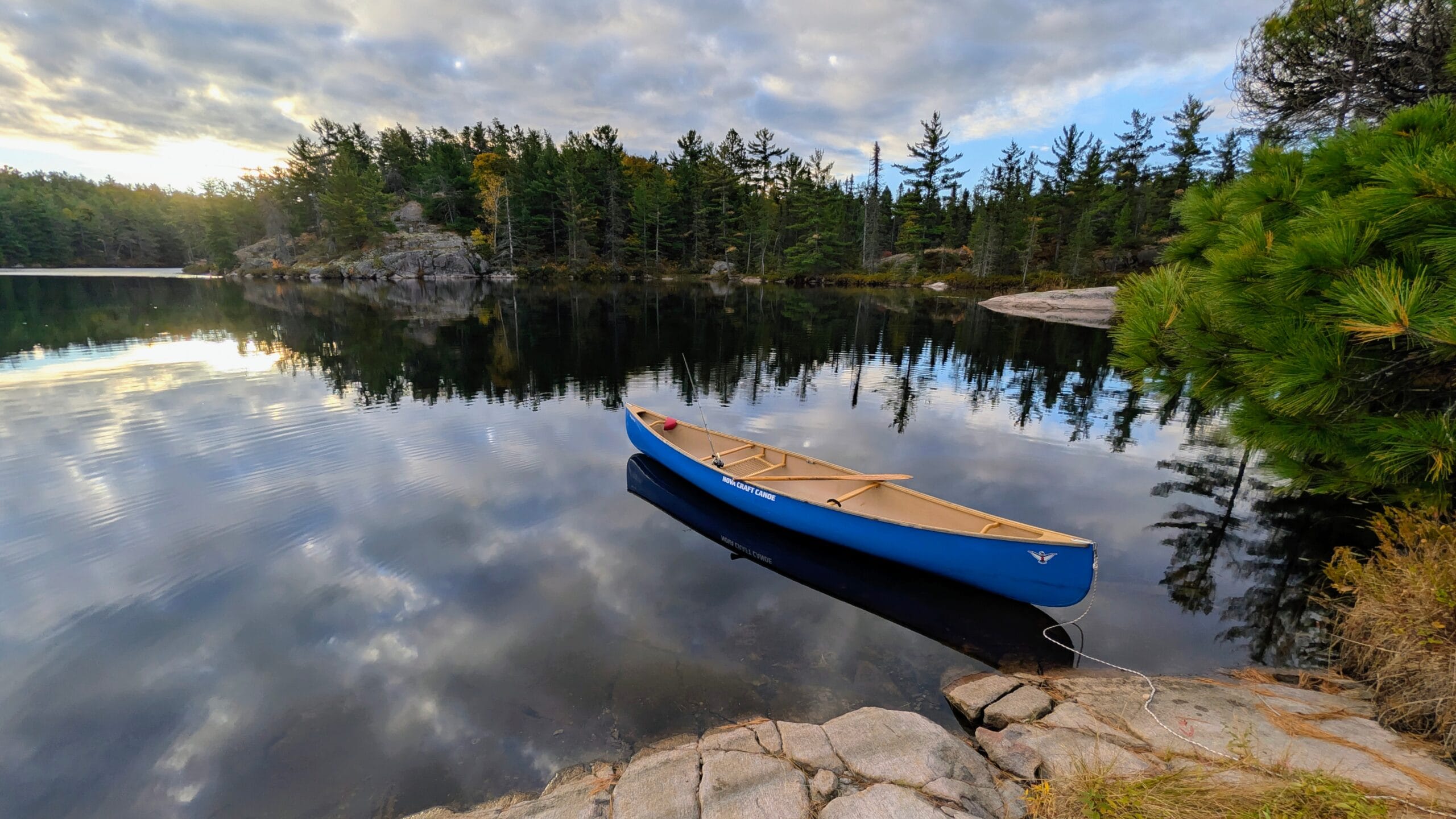
Type Two Fun on the French River: Blazing Trails, Mirror Water, and Beating the Storm
The night air biting through the cottage porch has a crisp, hollow ring to it that only arrives in early October. Inside, the cottage floor is littered with dry bags, wool socks, and the familiar, chaotic sprawl of gear being staged just six hours before setting off. Outside, the silence of the Canadian Shield settles into a deep slumber, punctuated only by the occasional pearcing call of a lonely loon.
This was to be my second solo backcountry trip of the season, a return to familiar water in the French River backcountry. But I had no interest in simply repeating a known loop. An old map had planted an itch weeks ago: a hidden lake locked deep inside a tract of protected wilderness, surrounded by hundreds of hectares of roadless granite, spruce, and bog. By law, no motor of any kind could penetrate its boundaries; by geography, only foot trails and rugged quad tracks skirted the outer perimeter. If I wanted to see that water, I would have to forge my own way in—a minimum of two kilometres of untracked bushwhacking over the jagged ribs of the Shield, carrying boat, shelter, and sustenance on my back.
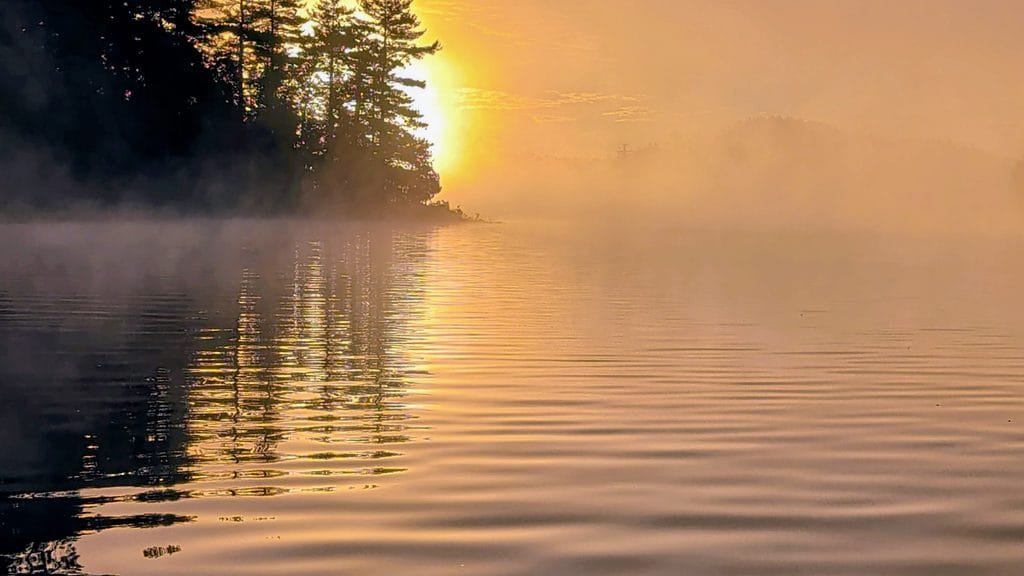
At first light, the thermometer dipped below zero. A heavy white frost blanketed the shoreline grasses and dusted the stunted aspens like powdered sugar. Off the black, glassy water, a thick, ghostlike steam rose into the windless air, drifting with the first faint stirrings of a morning breeze. I slid my 14′ Nova Craft Prospector Solo from the truck racks and portaged her frosted hull down to the water’s edge. Once the two dry bags and food barrel were lashed in place, I pushed off into the quiet, dipping the paddle blade without a sound and slipping through the bank of mist like a phantom. The first three kilometres glided beneath the keel effortlessly, my rhythm settling into an easy cadence as the climbing sun began to warm my shoulders. Even the routine 200-metre portage that followed felt light, my boots finding sure, familiar purchase on the worn granite.
Then the expedition demanded its toll.
The morning had started out gorgeous, but the sheer exhaustion of trailblazing almost made me forget to look up.
By nine o’clock, I glided up to the beaver dam at the tail of the first lake. I had hoped to find the faint traces of an old portage etched somewhere into the timber—perhaps a trail forgotten by casual weekenders, or an ancient hunting route once traveled by the First Peoples of the area, still whispering through the brush. There was nothing, save for the telltale signs of selective logging: stumps cut to identical dimensions, likely felled years ago to square up the walls of a backcountry cabin.
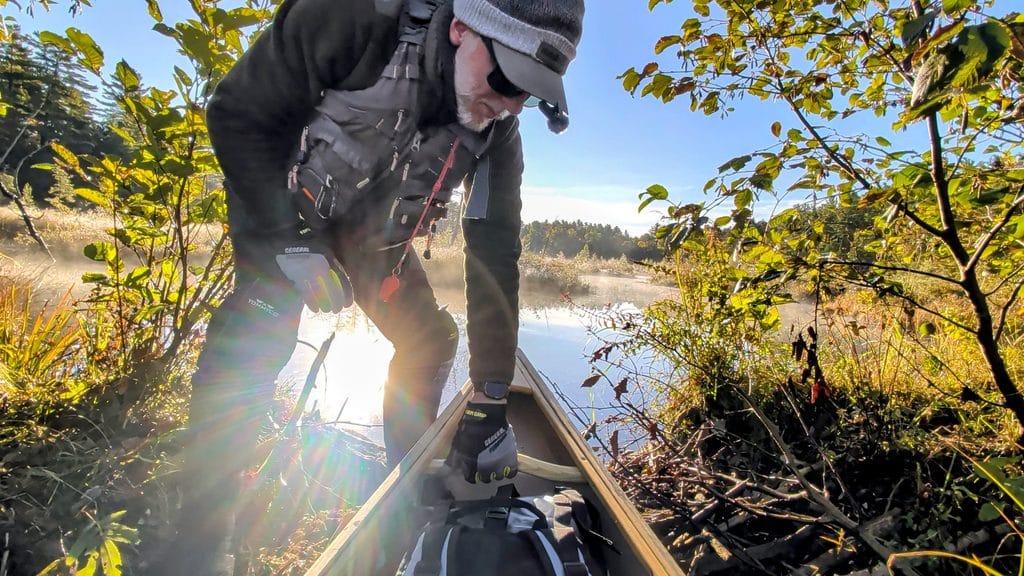
For forty minutes I climbed back and forth across a broken ridge, tripping over hidden deadfall and pushing through young stripped maple trees, searching for any break in the trees that might offer a reasonable put-in on the second lake. When I finally found a sliver of accessible shoreline, the realization set in: if I wanted to reach it, I would have to carve the path myself.
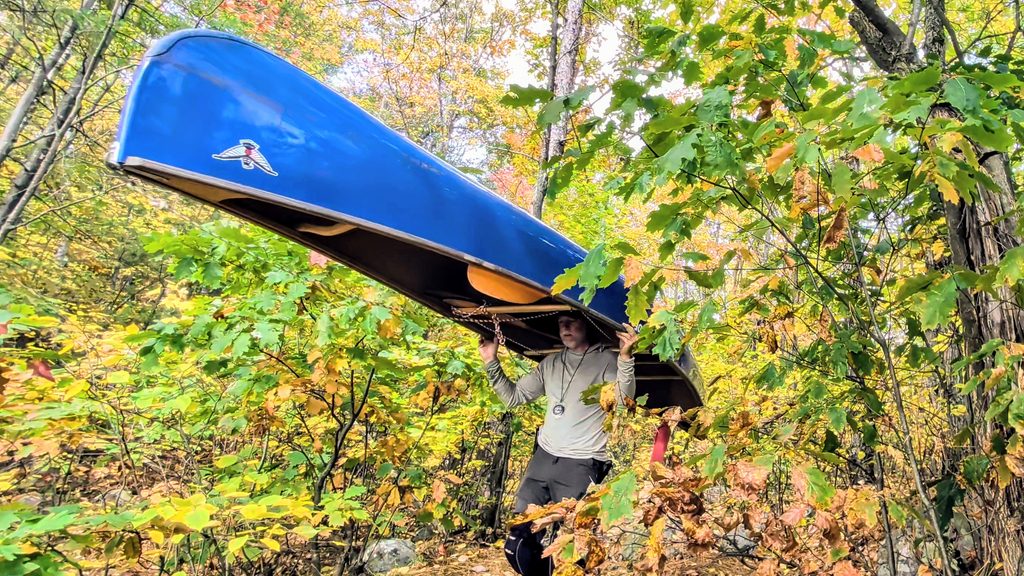
The morning had started out gorgeous, but the sheer exhaustion of trailblazing almost made me forget to look up. From mid-morning until past noon, the stillness of the woods was broken only by the rhythmic bite of the saw and the heavy crack of cleared deadfall. For 600 metres, I chopped through tangled underbrush, knocked down stands of brittle bracken ferns, bucked wind-thrown trunks that choked the corridor, and levered ankle-busting boulders out of the tread across steep, fractured ground. By half past twelve, a rough, semi-clear route through the bush, blazed with high-visibility flagging tape, finally tied the two waters together.
Then came the carrying.
Despite a lifetime on the water, the quiet instinct to pack for every conceivable failure had betrayed me. I had packed two, three, sometimes four backups of gear “just in case.” Now, the bush was making me pay for every ounce. Seven separate times, I shouldered heavy packs and balanced the canoe over that raw, hilly 600-metre cut, my boots sliding across slick lickens and moss, and my lungs working in the ever warming air. By 3:40, hot, hungry, and thoroughly drained, the last load was thrown into the bottom on my waiting canoe.
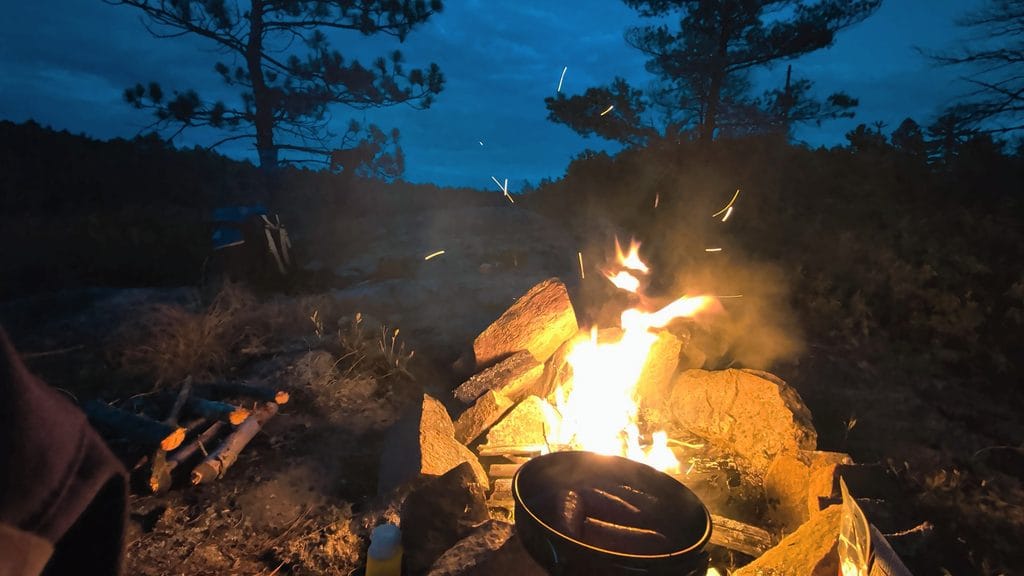
An hour of paddling later, the sun was dropping fast, casting long, cold shadows across the third lake. I managed to tuck into a small, sheltered bay guarded by a bald granite outcropping. With fading light, I strung up the hammock, pulled the rain tarp taut, and built a crude fire ring directly on the exposed bedrock. Slices of schnitzel and thick sausages hissed over the coals, the grease dripping into the driftwood embers and filling the chill air with rich, woodsy steam. It was far too late and my limbs were far too spent to rig an adequate bear hang in the dark, so the barrel stayed out on the stone for the night. By ten, I climbed into the hammock, listening to the vast, empty dark.
Sleep, however, was a battle. High above the bay, a wind howled through the treetops, tearing pine needles from the canopy, but down in my sheltered cove, not a whisper of moving air stirred. Wrapped in thermal base layers, heavy sweats, a thick winter sleeping bag, and a lofted underquilt, I had engineered a furnace. The ambient air dropped to 5°C, but inside the cocoon, I was baking to the point of nausea, kicking off layers in the dark while the wind roared harmlessly above.
Pushing deep into unmaintained Crown land solo means knowing exactly where the line sits between grit and recklessness.
The next day called for a slower pulse. I took my time flipping pancakes over the small stove, tidied the site, and spent the better part of the morning drifting along the deep rock drop-offs with a rod in hand, letting the cool breeze clear the cobwebs of my groggy mind.
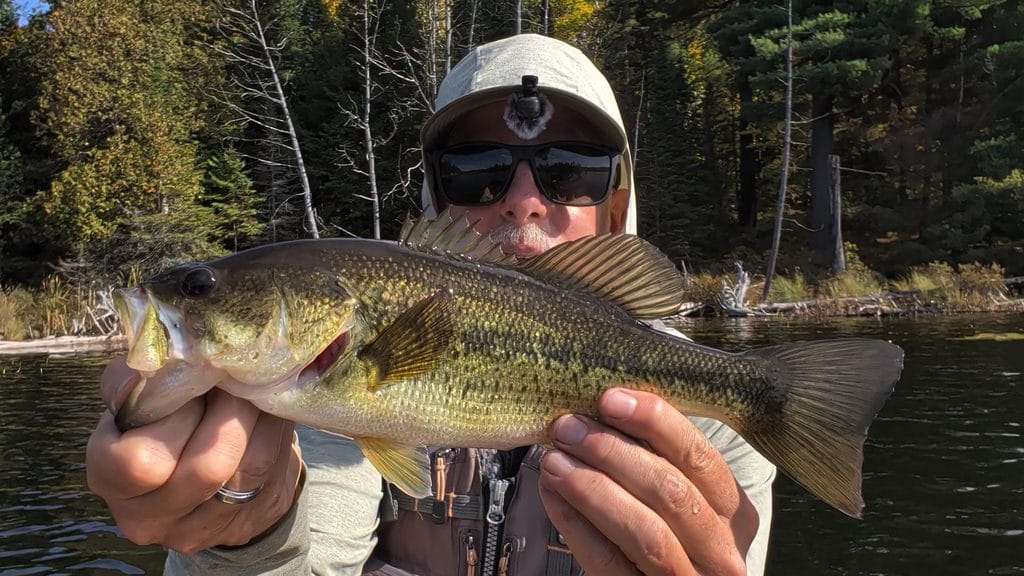
In the afternoon, I paddled over to scout a potential overland route toward the hidden lake. The wilderness quickly put my ambitions in check. Looking inward from the shoreline, the terrain presented only two options: a twenty-metre wall of sheer, slick granite daring a solo climber with a loaded boat, or a choked labyrinth of hardwood forest tangling through dense, ankle-trapping understory.
Pushing deep into unmaintained Crown land solo means knowing exactly where the line sits between grit and recklessness. With cell service nearly nonexistent and no personal locator beacon clipped to my pack, tackling two kilometres through that dense timber alone wasn’t an adventure; it was a reckless bet against a compound fracture and no way to call for help.
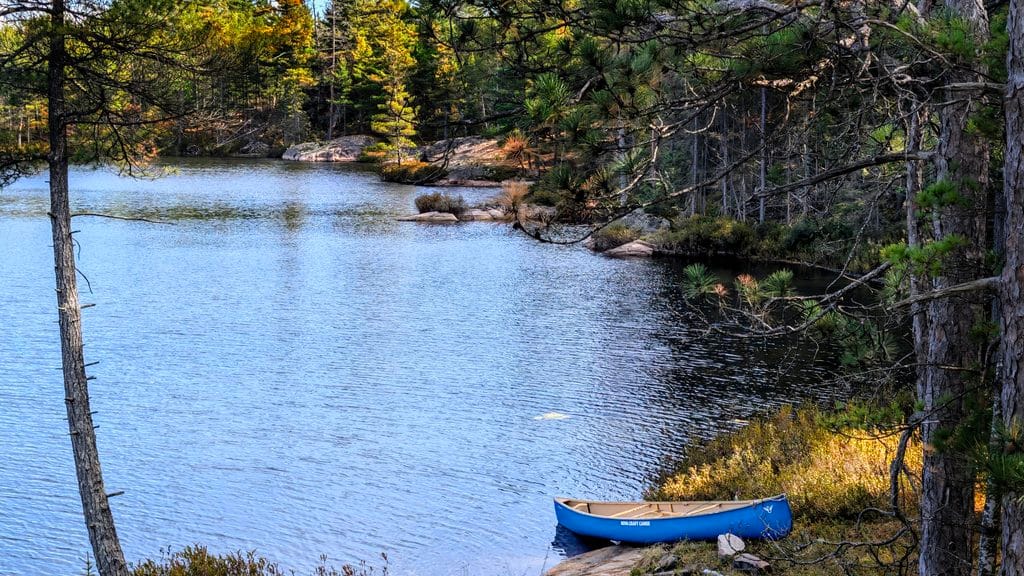
I made the call to stand down, paddled back to camp, and took an afternoon nap after reading a few pages of David Henry Thoreau. Later, as dusk gathered, I built the fire early, watching the sparks climb into the dark and listening to the pine needles hiss in the flames for hours before retiring to the hammock to read.
Day three offered the reward. I opened my eyes on October 8th to a morning carved out of absolute stillness. The surface of the lake was an unbroken sheet of polished glass, reflecting the gold of the poplars and the deep orange of the maples so sharply that sky and water seemed inverted. I skipped breakfast entirely, dropped the boat into the calm, and let the bow split the reflection. I cast a line here and there, but mostly I just drifted, watching the my old childhood paddle blade cut into the glass-calm waters and vanish into the black depths. It was the kind of pristine, effortless water that you hold in your memory through for years to come.
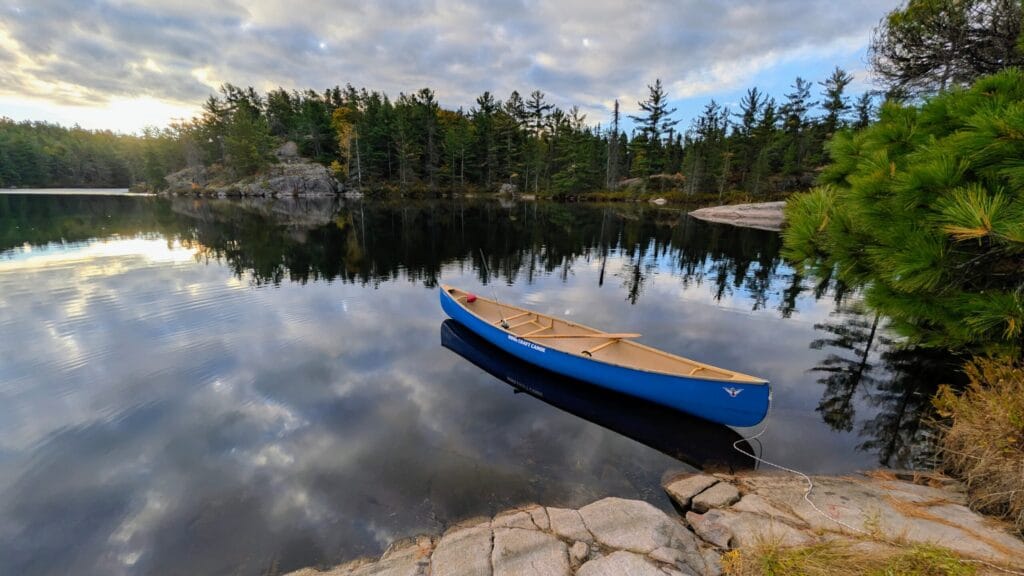
Yet weather on the Shield rarely negotiates. The night before, my son had warned me that a front was moving in, forecasting winds building to 16 km/h by late morning. Sitting on that glassy lake, an unmistakable intuition hit me—a quiet hum in the gut telling me to pack camp and point the canoe toward home. I’d be leaving a day early, but that old expression, ‘the quiet before the storm’, was ringing alarm bells in me.
I had broken camp and hit the water by 10:30. The return journey turned into an eight-hour expedition of its own. I paddled leisurely through the remainder of the morning, nosing the bow into quiet beaver ponds, tracing faint game trails along the shore, and exploring weathered rock outcroppings. By early afternoon, however, the wind arrived with teeth. Tucking out of the blow onto a provincial campsite fronted by a beautiful sweep of sand, I took the opportunity to plunge into the frigid water, washing off days of trail sweat and shocking my senses awake. I could have thrown in the towel and pitched camp right there, but scattered litter and the general degradation of the site spurred me to find an alternative.
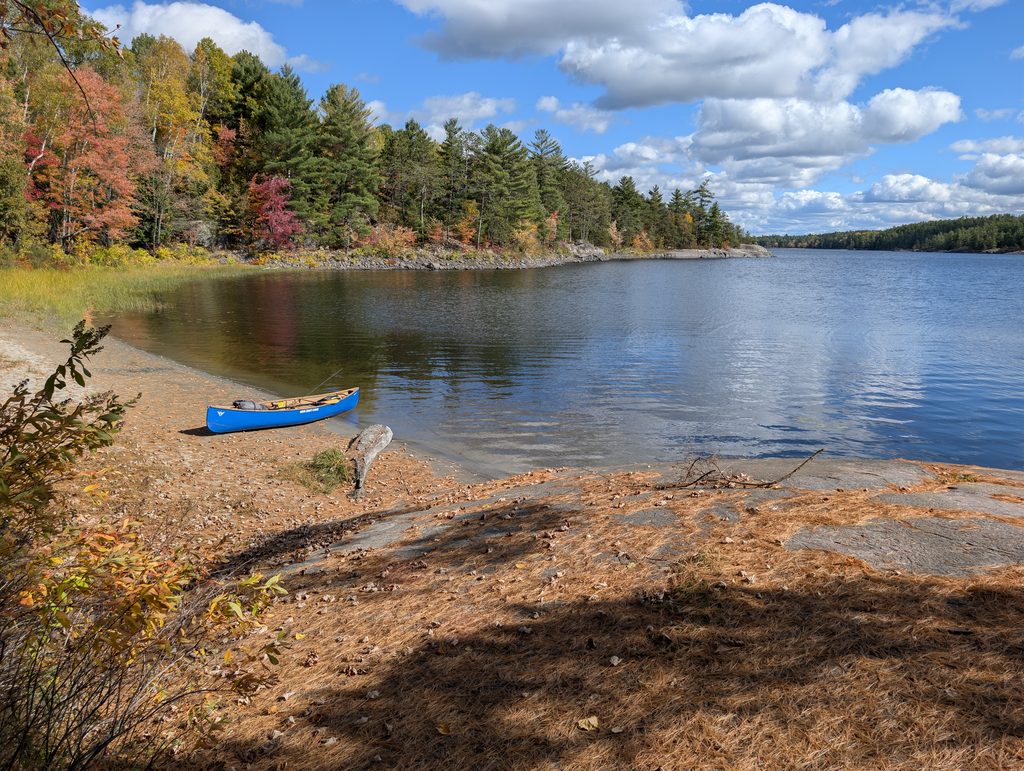
I met the wind head-on and pushed a kilometre through the chop to the next site. It sat barren of suitable timber, making a hammock hang a non-starter. There was one more potential site further out, but it sat too far off my line, so I made the executive decision to push straight through to the cottage. By my estimation, I could just beat nightfall. What followed was a relentless, head-down battle against building whitecaps and an ominous, bruised sky rolling low over the granite ridges.
The final two portages were grueling and time-consuming, if otherwise uneventful. The first was a 400-metre haul over rough ground that demanded three separate carries; the second was a 100-metre hop that I managed to muscle through in two. After restowing the gear and shoving off for the final open-water crossing, the sky had turned dark and threatening. With the sun dropping toward the horizon and an autumn squall clearly brewing, I buried the blade and dug deep for the final push.
I ran the canoe onto the cottage beach with only minutes to spare. Scarcely had the gear cleared the sand before a violent microburst ripped across the lake, tearing hail, horizontal rain, and gale-force squalls out of the clouds. Standing safe inside the cottage, watching the water churn into white foam where I had just been paddling, the lesson settled in plain and simple: out here, your limits are far higher than comfortable daily life leads you to believe, but when the land tells you it is time to move, you listen without hesitation.