
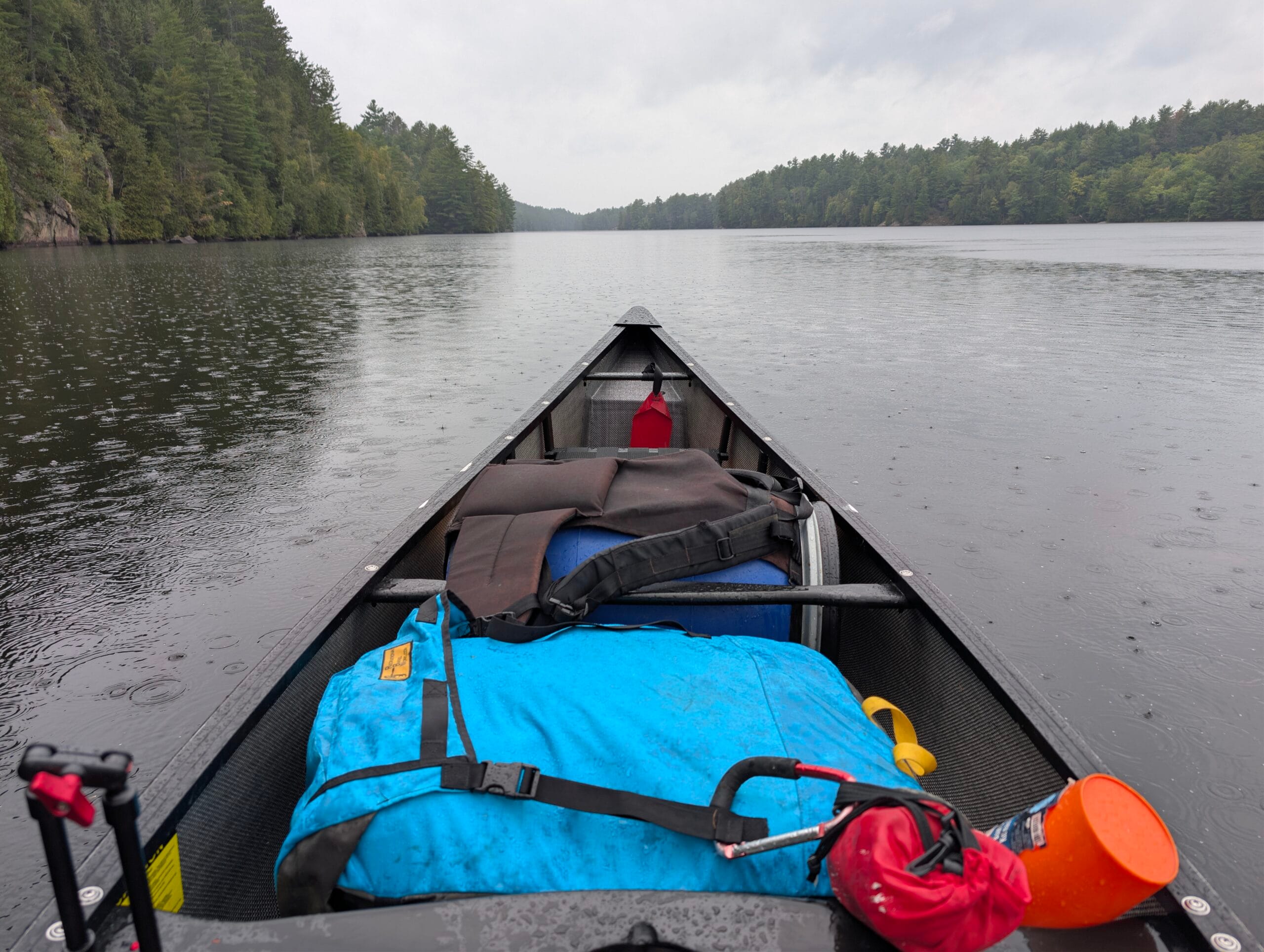
Heavy Rain, Headwinds, and Hammocks: Four Days Solo in Noganosh
Solo canoe tripping has a way of stripping away rigid plans within the first hour on the water.
Day one heading into Noganosh Lake Provincial Park was a wet, relentless affair, reminiscent of the gloomiest back-to-school weeks from childhood. The goal was to push straight into Noganosh Lake, but Smokey Lake had other ideas. Fierce winds churned up rolling whitecaps, and solo paddling a Nova Craft Prospector 16 into that kind of chop quickly shifted the priority from distance to sound judgment. With an extra body in the bow and some ballast, pushing through might have worked. Flying solo, the smarter move was calling it early and retreating to a familiar site once shared with a good friend.


Camp went up in the pouring rain, and dinner was prepped in the pouring rain—a minor comedy compounded by realizing the camp stove fuel was still sitting at home. When the deluge finally broke, the evening redeemed itself with quiet solitude and the final chapters of Camper Christina’s The Space Between the Lakes, a title that felt entirely fitting both literally and metaphorically out on the rock.
The next morning offered false promises of glass-calm water. A steady stream of motorboats and float planes eventually shattered the stillness, prompting a quick pack-down to push for Noganosh proper. Then the gale returned.
Grinding out six grueling kilometers into a punishing headwind burned through nearly every ounce of reserve energy. The first target site offered zero workable hangs for a hammock, doubling only as an emergency lunch perch. Attempting another kilometer and a half toward a backup site into rising gusts proved futile. The lake made the call, forcing a retreat back onto Smokey Lake. That pivot turned out to be an unexpected gift: a brand-new campsite that delivered the best hammock setup of the entire trip.
Day three brought mist rising off cool water, quiet calm, and the luxury of staying put. Breakfast simmered slowly over a newly scrounged flame while the fire kept the chill at bay. The morning patrol even revealed an open-air backcountry privy worthy of the history books.
The rest of the day was pure backcountry drift: exploring quiet bays, letting the Prospector float on a long painter line like a pony in a pasture, catching bass on light tackle, and tracing a forgotten channel that felt entirely untouched by modern time.
By day four, the alarm sounded at the crack of dawn to break camp. What mapped out as a four-hour exit stretched to six, dragged out by heavy shoulders and far too many “last casts.” Between portages, crossing paths with a pair of first-timers clutching the familiar Lost Lakes route maps offered a great excuse to pause and trade site beta and honey holes.
After a triple-carry along Smokey Creek and dodging a dozen wide-open bass boats buzzing down Kawigamog Lake toward Fleming’s Landing, the bow finally kissed the dock. Five hours of highway driving later, the unpack-repack cycle began immediately for the next guided route—tired, sore, and thoroughly reset.
Trips like this are a good reminder that backcountry canoe routes don’t have to mean suffering through rookie mistakes alone—like forgetting the stove fuel or getting pinned down by a sudden gale. Crossing paths with those paddlers clutching route maps got me thinking about how steep the learning curve can feel when you’re just starting out. If you’ve been wanting to venture beyond car camping but feel intimidated by route planning, packing gear, and tackling your first carries, let me know in the comments or send a message. Would an all-in-one beginner portage package—covering the right gear, route beta, and hands-on paddling prep—be something you’d want to see us put together for next season?