
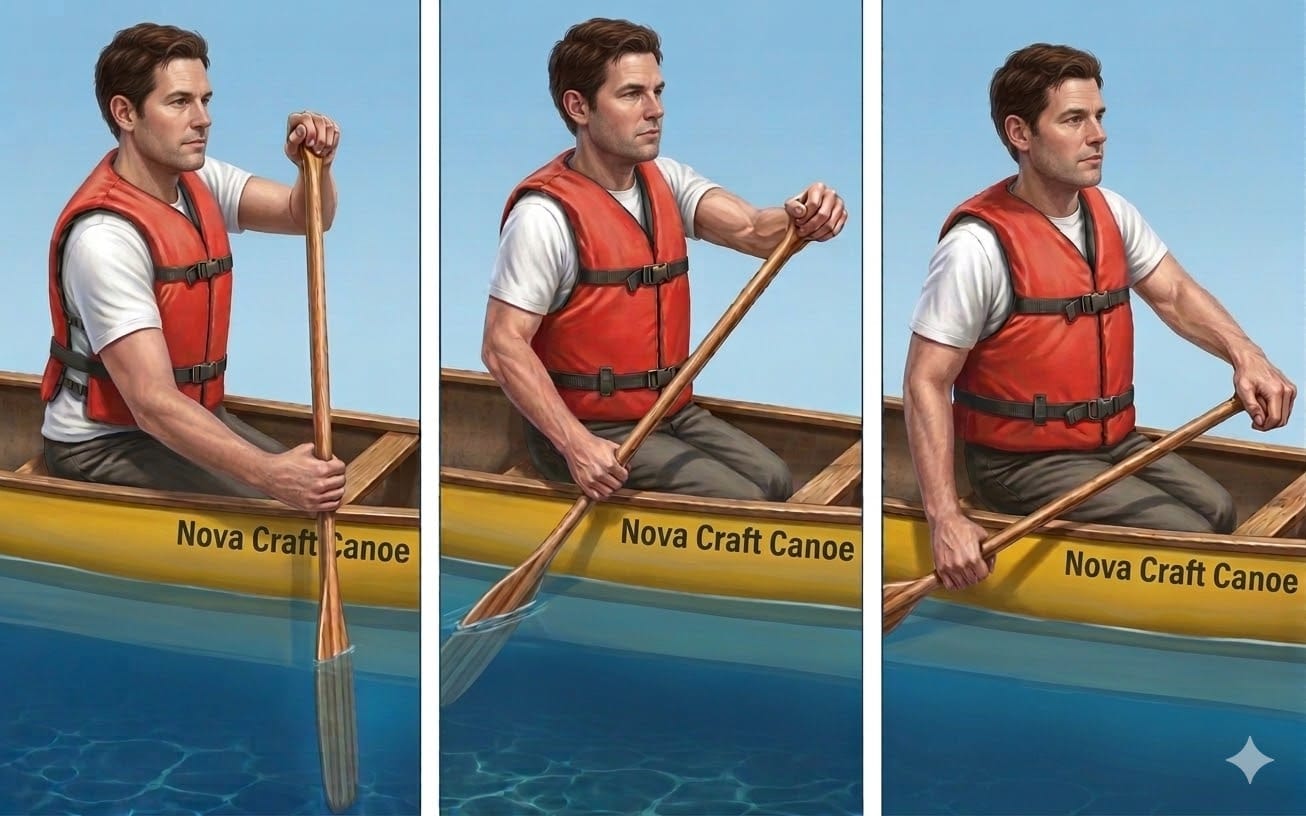
Mastering the J-Stroke
The Secret to Effortless Steering on the Grand River
If you have ever spent a day zig-zagging down the river, you know the frustration. When you are paddling in the stern of a canoe, there is a natural tendency for the boat to veer away from the side you are paddling on. Many beginners try to fix this by constantly switching their paddle from side to side—a habit that will quickly get you laughed off the water by seasoned paddlers unless you are using a bent-shaft paddle. Others rely on a stern pry, affectionately known as the “Goon Stroke,” where you twist the blade inward like a rudder. While it steers the boat, it acts like a brake and completely kills your forward speed.
The solution to gliding straight and true is mastering the J-stroke.
A Stroke with Universal History
While the J-stroke can feel a bit unnatural the first time you try it, it is a deeply traditional and universally effective technique. Paddlers as far afield as the Amazon Basin, the islands of the Pacific, and the vast forests of Canada have historically relied on this exact steering stroke. Over time, variations of the J-stroke have emerged, including the C-stroke and the Canadian Stroke. The Canadian Stroke, originally known as the “Knifing J-Stroke,” is essentially just an extended J-stroke and is often considered the pinnacle of canoe tripping perfection.
The Purpose of the J-Stroke
The J-stroke is the ultimate steering tool for both solo paddlers and tandem stern paddlers. Its primary purpose is to provide minor course corrections to keep the boat on a straight path while maintaining your forward momentum. By adding a small, continuous pry at the very end of the power phase, you counteract the turning momentum created by your forward stroke. Because it is so efficient, mastering this stroke means you will save a massive amount of energy on long river days.
Technique: How to Execute the J-Stroke
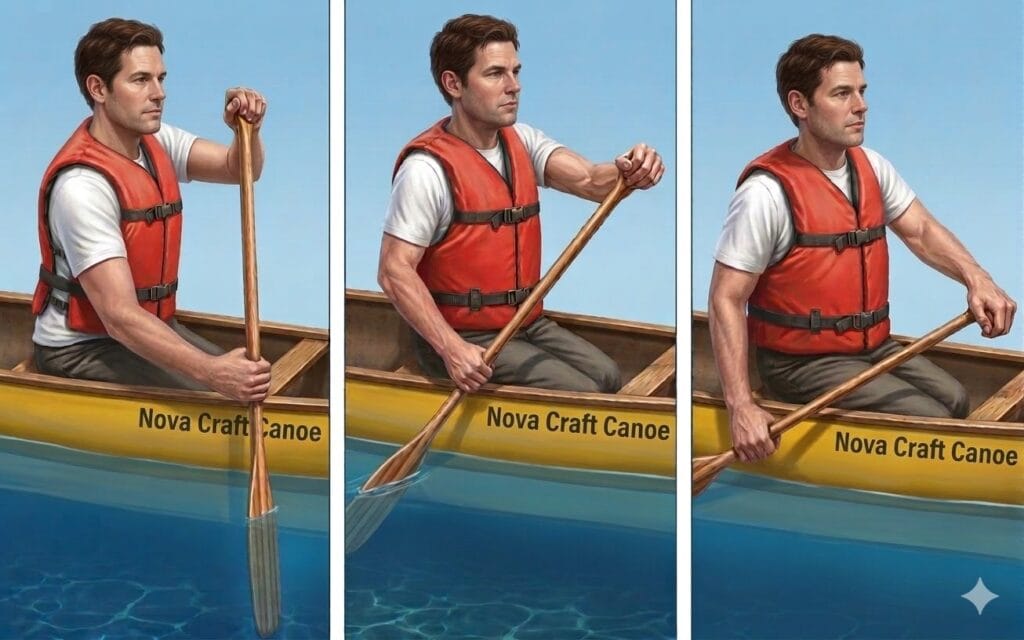
What makes the J-stroke unique is that you use the exact same face of the blade for both the power phase and the steering phase. Here is how to break it down:
- The Setup: Begin the movement just like your regular forward stroke, pulling the blade powerfully through the water.
- The Twist: As the paddle shaft reaches a point right beside your knee, it’s time to transition into the pry. Rotate your top grip hand forward and down so that your thumb is pointing straight down toward the bow of the boat.
- The Grip: Here is a massive pro-tip to save your joints! Do not keep a rigid grip on the top of the paddle. Allow your top hand to slide around the grip slightly so it rests on the outside face, loosening your fingers to remove the stress from your wrist.
- The Pry: With the power face of the paddle now pointing outward, push your bottom arm slightly outward to trace a quick “J” pattern in the water. You can brace the paddle shaft against the gunwale of the canoe and pull your top control hand inward over your onside knee to pry the blade away from the boat.
- The Exit: Once the steering is complete, don’t lift the paddle up and out the back like a spinning propeller, as this is stressful on your arms. Instead, simply tilt the leading edge of the blade upward. The moving water will naturally lift the blade out for you, setting you up smoothly for your next stroke.
It takes a little bit of practice to build the muscle memory, but before long, your J-stroke will blend beautifully from one stroke to the next, allowing your canoe to carve a flawless, straight line across the water.
If you want some hands-on help perfecting your technique before tackling the “Amazon of Ontario” or the Glen Morris run, don’t let inexperience hold you back. Grab our free Beginner’s Guide to learn the secrets of effortless paddling, or book a river paddling lesson with our expert guides today!