
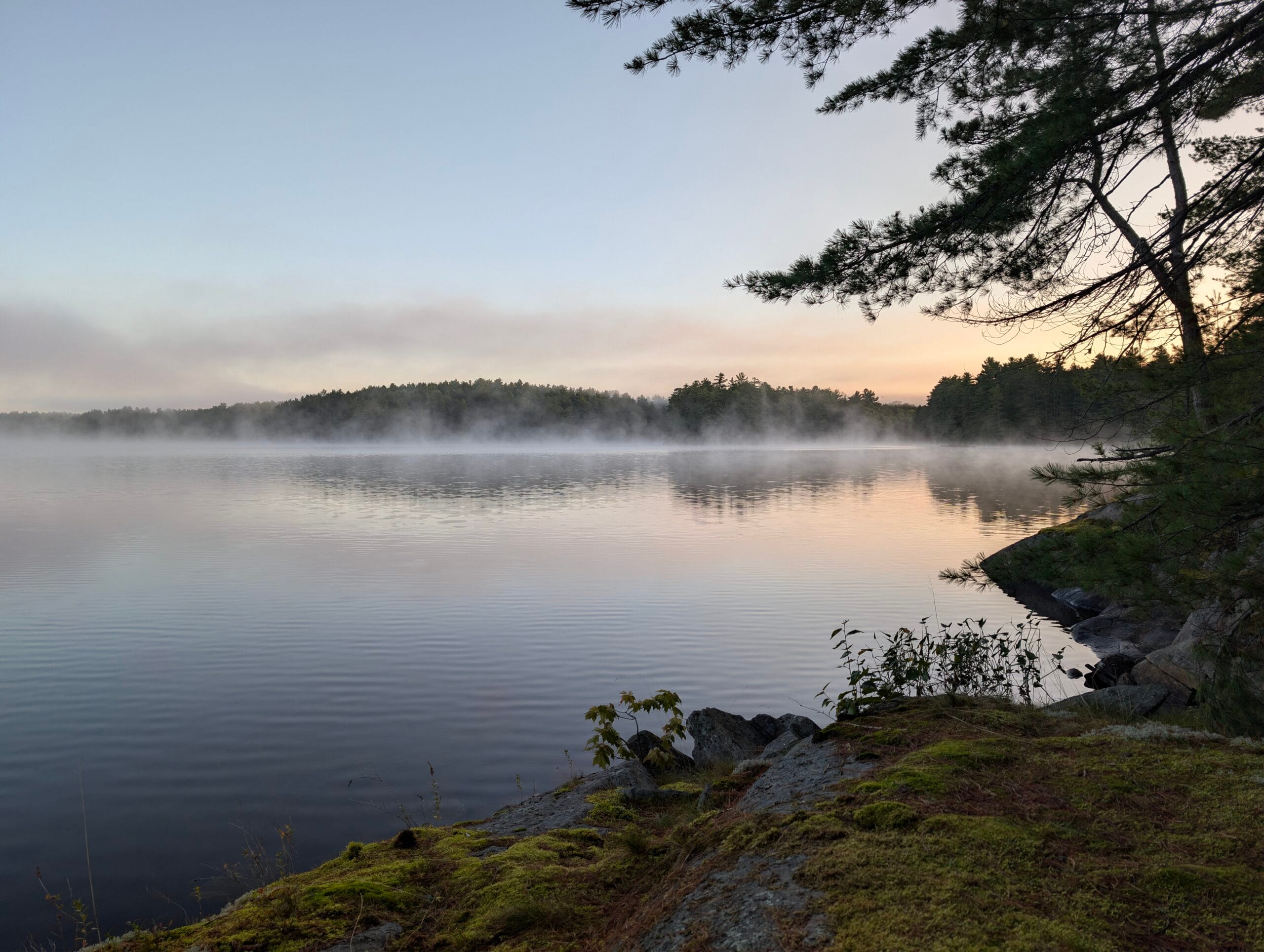
Northern Routes vs. Home Waters: Why the Grand is the Backcountry’s Best Training Ground
When a paddler’s mind wanders toward the edges of the map, it almost always drifts north. You picture the limestone canyons of the South Nahanni towering into low clouds, the wind whipping off the tundra along the Thelon, or the granite shores of Killarney and Temagami where the silence feels ancient and absolute.
Those remote wilderness corridors demand complete humility. A northern river does not care about good intentions, and it is entirely indifferent to how badly you wanted to make miles when the weather turns sideways. Long before you ever step onto a floatplane pontoon or push off from a gravel bar hundreds of kilometres from a paved road, the foundational relationship between blade, hull, and moving current has to be settled deep in your muscle memory.
That conversation does not start on day three of a remote expedition. It begins months earlier, on quiet home waters.
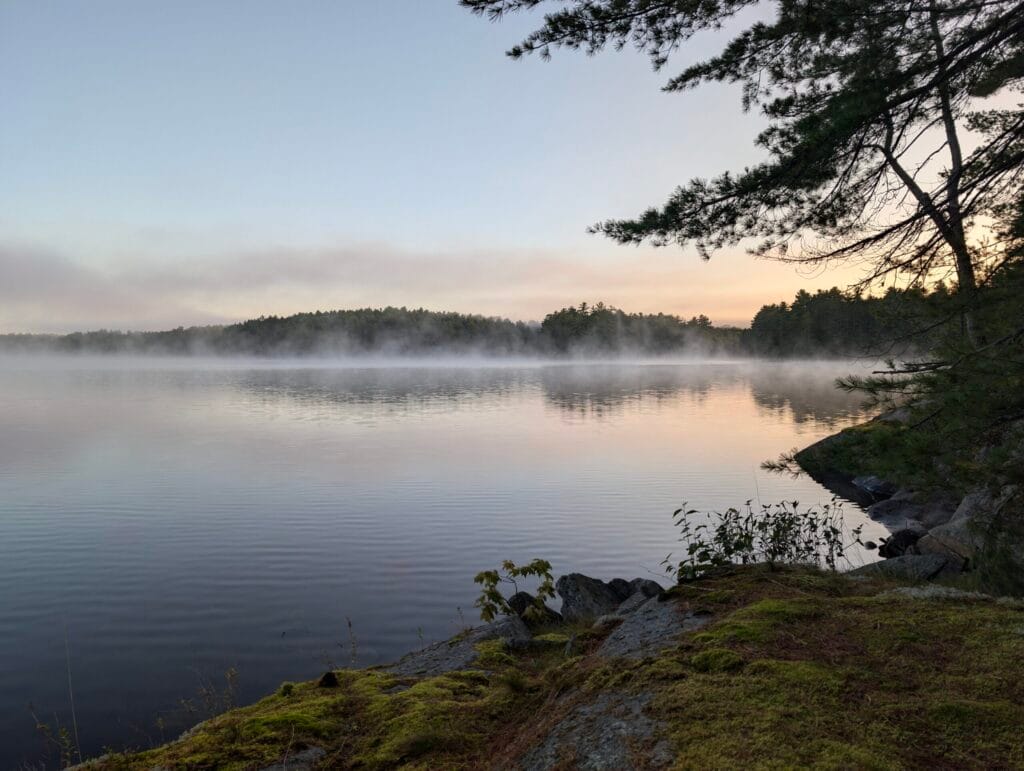
A loaded hull is not something to be muscled through a rapid, but something to be guided by the river’s own hydraulic power.
One of the great pleasures of running boats along the Grand River is our quiet connection to Canada’s legendary wilderness outfitters. Over the years, operators like Black Feather and Canoe North Adventures have been known to send their future guests our way before sending them into the Arctic, the Yukon, or the subarctic barrens.
The instinct makes perfect sense. You simply cannot simulate river dynamics on a flat lake.
Lake paddling is a steady, rhythmic march across open water. A river, however, is alive. Even the gentle swifts and gravel runs of the Grand force a paddler to stop treating the water like pavement. You learn to watch the surface for the smooth tongue of a downstream “V.” You feel the bow lift and pivot across an eddy line. You realize that testing dry bags, layering against a cold wind, and trimming an unbalanced canoe on familiar water allows mistakes to be quiet and forgiving. If your timing is off, you end up with wet boots and a laugh, not an emergency satellite call in the middle of nowhere. For anyone quietly sketching out an expedition for 2027, the real preparation happens in these shoulder seasons—autumn and early spring, when the water is crisp, the riverbanks are empty, and the current demands your full attention.
The tension vanishes, replaced by a grin so wide and immediate it is intoxicating.
The technical mechanics of moving water are important, but what keeps me on the river year after year are the human stories that unfold between the gunwales.
Earlier this season, I spent an afternoon on the water with a mother and daughter. Over casual conversation across the boat, they had recently stumbled upon an unexpected discovery: the Nahanni River sat firmly at the very top of both of their lifetime bucket lists. Instead of letting it remain a distant daydream, they made a pact to go. They booked a training run on the Grand to get comfortable with current, shake off the rust, and build shared trust before heading north into the Northwest Territories. Watching the two of them find their cadence, reading the ripples and anticipating each other’s strokes, was a reminder of how moving water binds people together in ways few other places can.
Then there are the seasoned backcountry trippers. I often guide paddlers who have logged decades of portage routes through the Algonquin interior, yet have never pointed a canoe down a moving river. At the first swift, you can see the apprehension in their shoulders—the tight grip on the shaft, the hard stare at the ripples ahead.
Then the river takes the bow.
They set an angle, execute a clean draw, and carve into the quiet water of an eddy behind an island gravel bar. In a split second, they realize they aren’t fighting the water; they are dancing with it. That sudden spark of accomplishment never gets old.
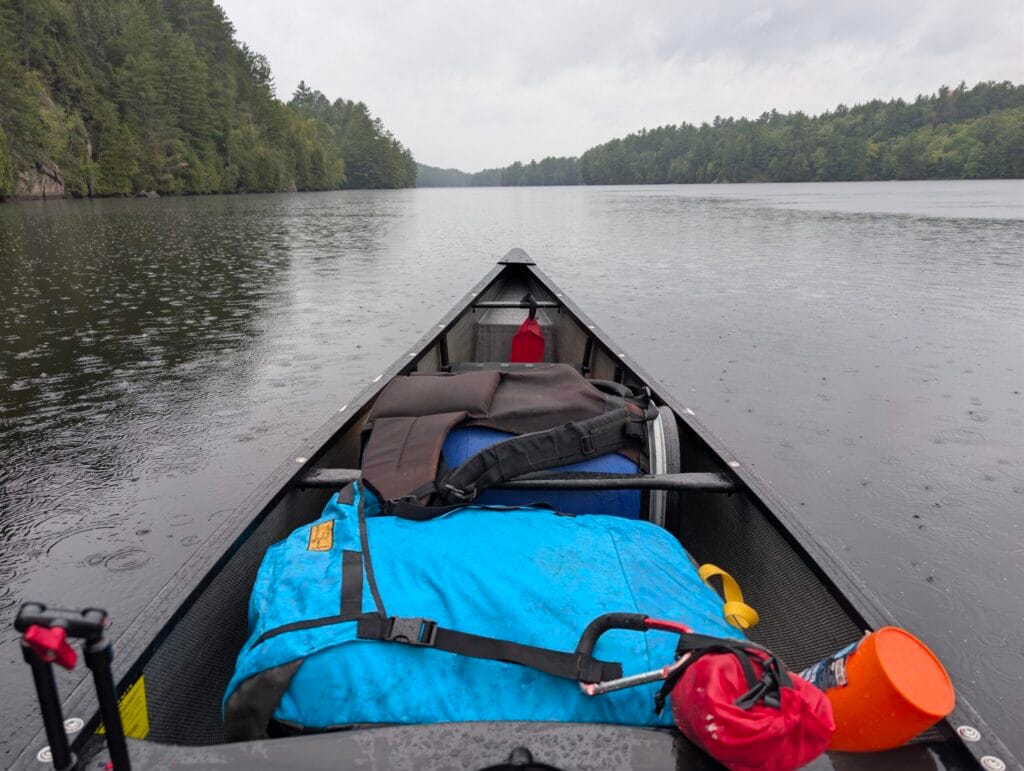
In a tandem boat, a strong partner can mask a sloppy stroke. A solo canoe tells no lies.
Paddling is a craft you never truly finish learning. The moment an outfitter or guide thinks they have moving water entirely figured out is usually right before the river offers a swift, humbling correction.
As our public rental fleet winds down for the season and October approaches, I make it a priority to step out of the operator’s boots and get back into the student’s seat. In early October, I am heading out to pursue my ORCKA Basic Canoeing Level 4 (Solo) certification.
Level 4 is the definitive benchmark for solo canoe handling in Ontario, and it is as honest as paddling gets. Heeling the boat until the gunwale grazes the surface to carve a tight circle, holding a silent, continuous Canadian stroke without breaking forward momentum, and executing deep-water re-entries in brisk autumn temperatures require patience and deliberate practice. Taking the time to be coached, critiqued, and challenged by fellow instructors keeps my blade work honest and sharpens my eye for the river.
Every great expedition begins long before the shuttle arrives at the put-in. It starts in quiet moments of preparation, in the willingness to be a beginner again, and in the hours spent learning how to listen to the current beneath your keel. The far northern rivers will always be waiting out there on the horizon, but the craft that carries you safely through them is built right here, one deliberate stroke at a time, on the quiet waters of home.