
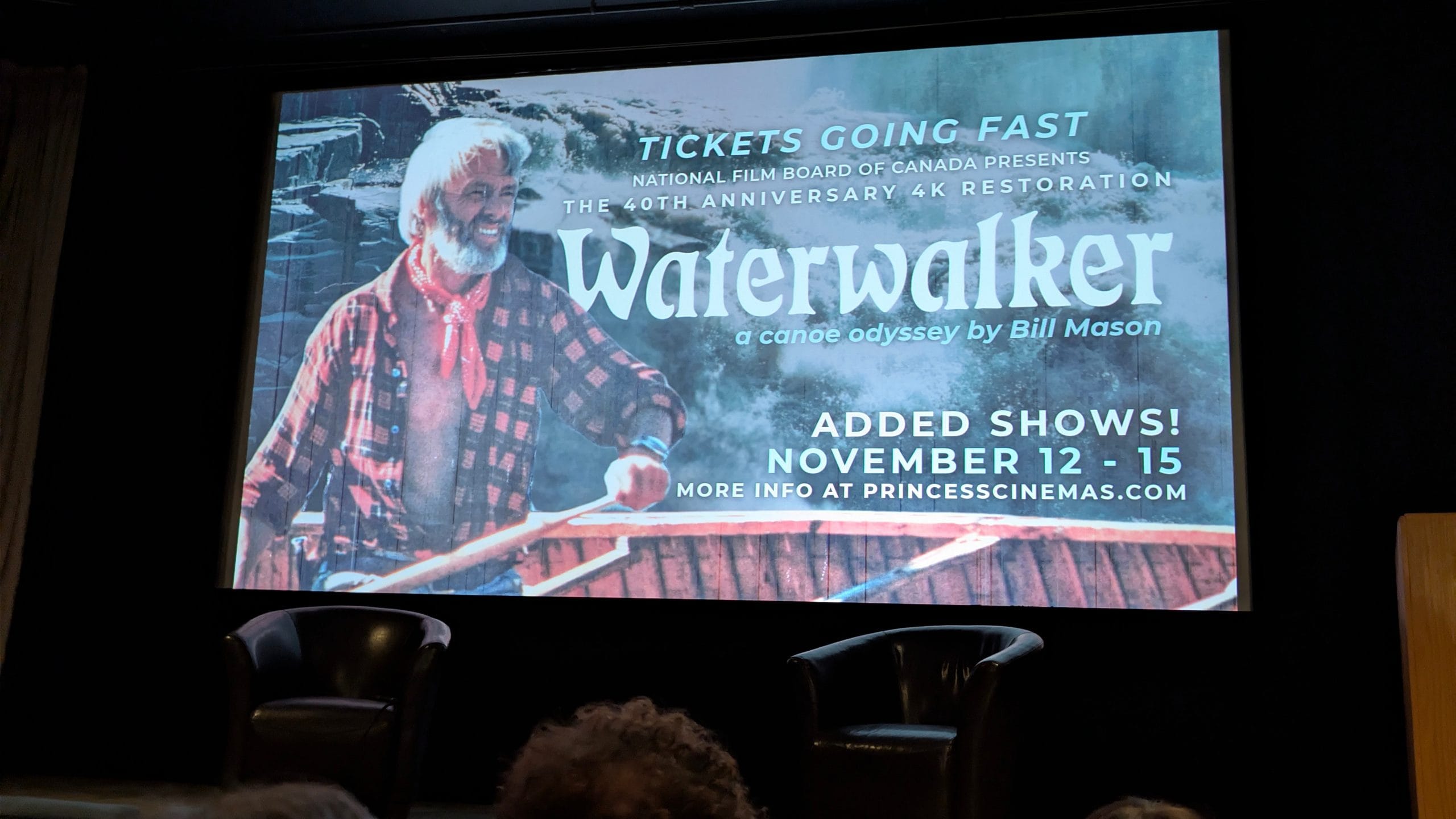
Waterwalker at 40: Bill Mason’s Enduring Vision of Nature, Risk, and the Canoe
Waterwalker at 40: Bill Mason’s Enduring Vision of Nature, Risk, and the Canoe
Sitting inside Waterloo’s Princess Cinema for the 40th-anniversary 4K remaster of Bill Mason’s Waterwalker was the kind of night that reminds you why paddling culture runs so deep in this country. With Becky Mason and James Raffan in the room for the Q&A, the screening felt less like watching an archival film and more like a gathering of the clan.
There is something unmistakably communal about watching a film like Waterwalker in a packed independent theatre full of fellow paddlers. Everyone in those seats knew the rhythms of a river, the pain of a portage, or the suprise of the unexpected, which meant the entire room laughed in unison at the classic, unspoken moments—the dry humor of a boggy water entry up to their waste in mud, the wrong turn on a portage, the flipping of a canoe in rapids—that every canoeist immediately recognizes.
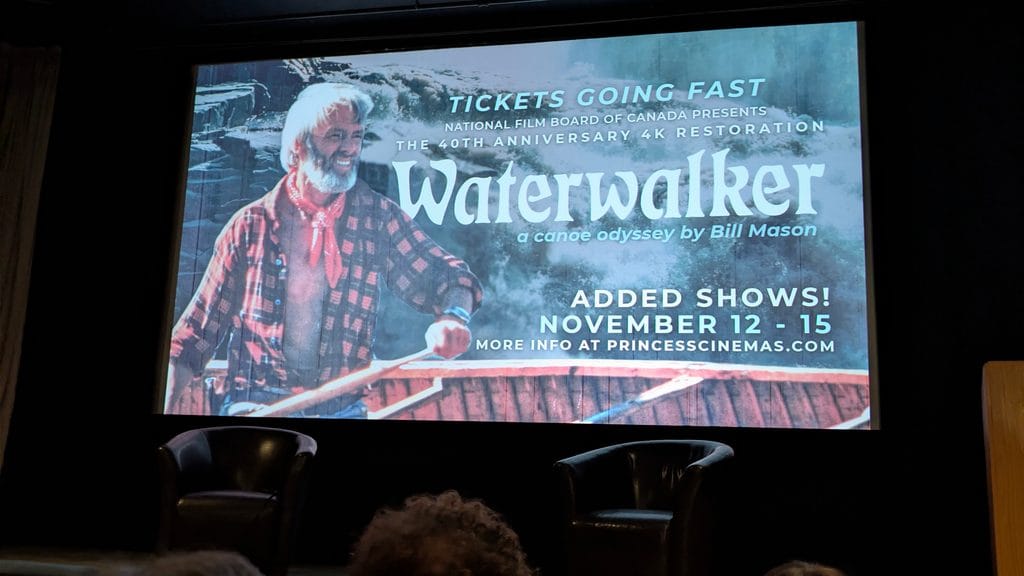
Seeing the rich red of Bill’s canoe and every drop of cold northern water restored in crisp 4K also brought into focus just how radical Waterwalker actually was—and still is. Twenty years in the making, the film is not an instructional manual on how to paddle. It is a deeply personal testament to reverence, vulnerability, and why human beings need raw contact with the wild if we expect to have any wild left to protect.
Reverence for Creation and Indigenous Ways of Knowing
Long before land acknowledgments became standard protocol or mainstream culture began reckoning with Indigenous stewardship, Mason was openly wrestling with the spiritual poverty of modern Western attitudes toward nature.
In Waterwalker, Mason treats the Canadian Shield not as a playground to be conquered or a resource to be extracted, but as living sacred ground. Between stretches of whitewater, he sets up his easel to paint lichen on granite, mist lifting off northern bays, and autumn maples reflecting in glass-calm water—acts of quiet devotion to what he openly recognized as the Creator’s handiwork.
Decades ahead of the broader public curve, Mason sought out and honored Indigenous perspectives on the land, understanding that the canoe itself was a profound technological and spiritual gift from the First Peoples of this continent. He recognized that until non-Indigenous Canadians learned to look at a river or a forest with the same relational respect—seeing ourselves as part of the natural order rather than masters standing above it—we would continue to destroy the very landscapes that sustain us.
Twenty Years in the Making—and the Day Superior Nearly Won
Because Waterwalker took two decades of filming across remote northern watersheds to assemble, it captures something modern outdoor media rarely allows: unvarnished, unscripted truth.
Nowhere is that clearer than in the harrowing, candid sequence on Lake Superior where cold, towering swells overwhelm Mason’s canoe, dumping him into the freezing water in full view of his family and the film crew. There is no heroic soundtrack swelling in the background, no manufactured drama. Watching it on the big screen—and hearing Becky Mason recount the reality behind the lens during the Q&A—drives home just how thin the margin for error truly was.
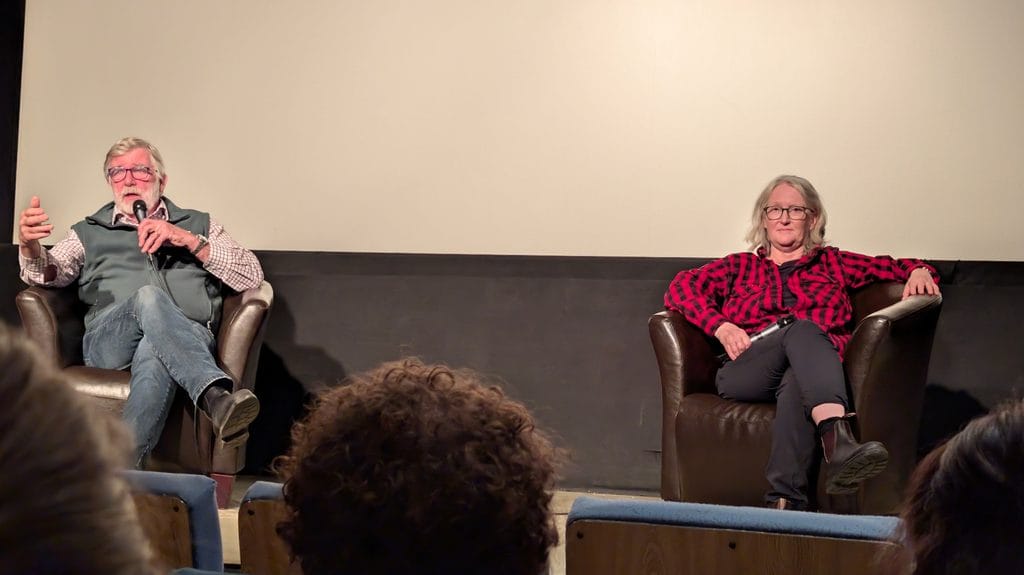
As the swells battered Bill in the frigid water, Becky’s mother, Joyce, sent Becky running back to camp to fetch a rope. It wasn’t just for a rescue; she wanted her daughter away from the shoreline so she wouldn’t have to watch her father drown. That raw moment strips away any romanticized myth of the invincible outdoorsman. Mason left the footage in because honesty mattered more than ego—the wild is real, the stakes are real, and respect for the water begins with knowing it can take your life.
Saving the Outdoors by Getting Back Into It
Mason’s central thesis in Waterwalker was simple and urgent: people will never fight to protect a wilderness they have never touched, smelled, or sweated through. You cannot legislate love for the land from behind a screen or a windshield.
Decades before terms like “nature-deficit disorder” entered the lexicon, Mason saw the danger of insulating ourselves—and especially our children—from the natural world. Today, his call to action resonates directly with the growing push to bring outdoor education and “risky play” back into our school systems. Kids who are never allowed to balance on a wet log, navigate a creek, build a fire, or test their own judgment against real elements grow up disconnected from both their own capability and the fragility of the ecosystems around them.
Mason understood that managed, real-world risk in the outdoors isn’t reckless—it is essential. It teaches humility, resilience, and stewardship in a way no classroom lecture ever could.
The Blueprint for Today’s Solo Paddling Revival
Look across YouTube today and you will find an entire generation of solo canoeists and wilderness adventurers—from northern Ontario bushcrafters to quiet backcountry filmmakers—documenting multi-day trips with a camera tripod, a canvas tarp, and a cedar-lined boat.
Almost every single one of them is walking a trail Bill Mason blazed forty years ago. Long before high-definition action cameras or social media algorithms rewarded slow-living wilderness storytelling, Mason proved that a single paddler moving silently through wild country, stopping to brew tea over an open fire and observe the light changing on the water, was compelling cinema.
Forty years after Waterwalker first reached audiences, hull materials have evolved and cameras have shrunk to fit in a pocket, but the core truth of Mason’s work remains untouched. When we slow down, step away from the noise, and dip a paddle into moving water, we aren’t escaping reality—we are finally coming home to it.