
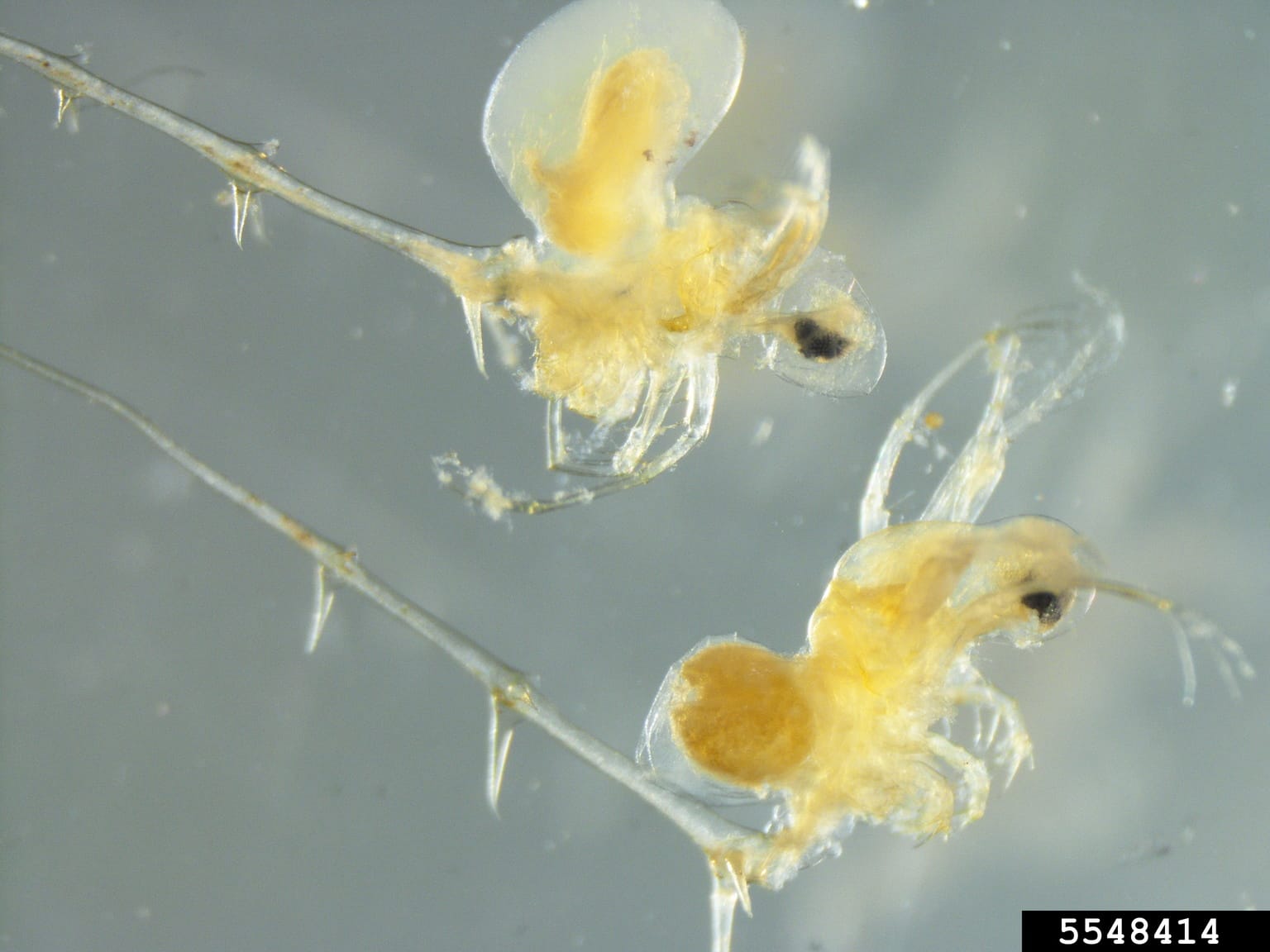
Invasive Species Found in Algonquin Park
The Spiny Waterflea is Established in Park Lakes
The latest reports from Ontario Parks have confirmed a discovery of the spiny waterflea within Algonquin Provincial Park, specifically in several lakes both north and south of Highway 60. While these invaders are already prevalent throughout the Great Lakes, it remains unknown if they have made it any significant distance up the Grand River.
This uncertainty makes it even more vital for those enjoying our local waters to be diligent. If you are moving your canoe or kayak from the Grand River to more isolated water bodies where invasive species have not yet taken hold, your cleaning habits are the only line of defense.
How to Identify and Report
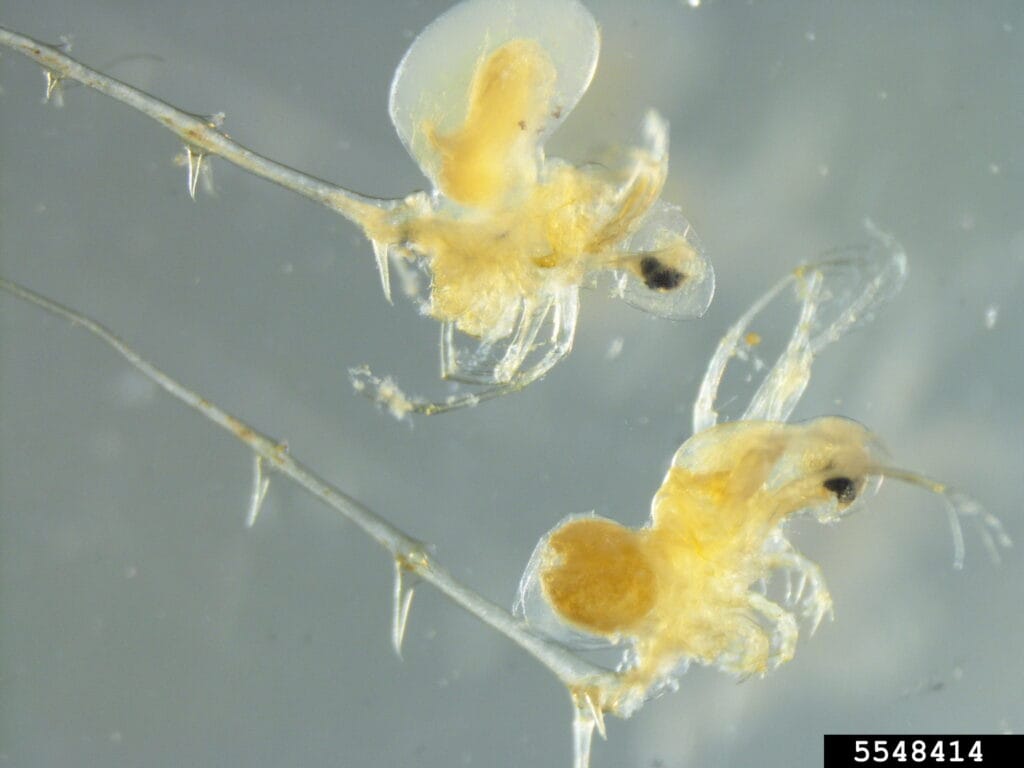
These organisms are tiny—usually about 1 to 1.5 cm long—but they are most recognizable when they clump together on ropes or gear, appearing like a mass of wet cotton batting with small black spots.
While they are well-established in the Great Lakes, protecting our inland tributaries is a priority. If you suspect you have found them in the Grand River area, please report the sighting immediately to:
- The Grand River Conservation Authority (GRCA)
- The Invasive Species Hotline at 1-800-563-7711
Take Action: Clean, Drain, Dry
Because there is no known way to eradicate the spiny waterflea once it enters a lake, prevention is the only solution. Before you head to your next destination:
- Clean: Power-wash or scrub your watercraft, paddles, and gear to remove any organisms or eggs.
- Drain: Remove all standing water from your boat onto dry land before leaving the site.
- Dry: If possible, let your gear dry in the sun for at least five days to ensure any microscopic hitchhikers do not survive.
By taking these small steps, we can ensure that our favorite paddling spots remain healthy and free of invasive disruptions for years to come.