
Ice Out: When the Grand Snaps
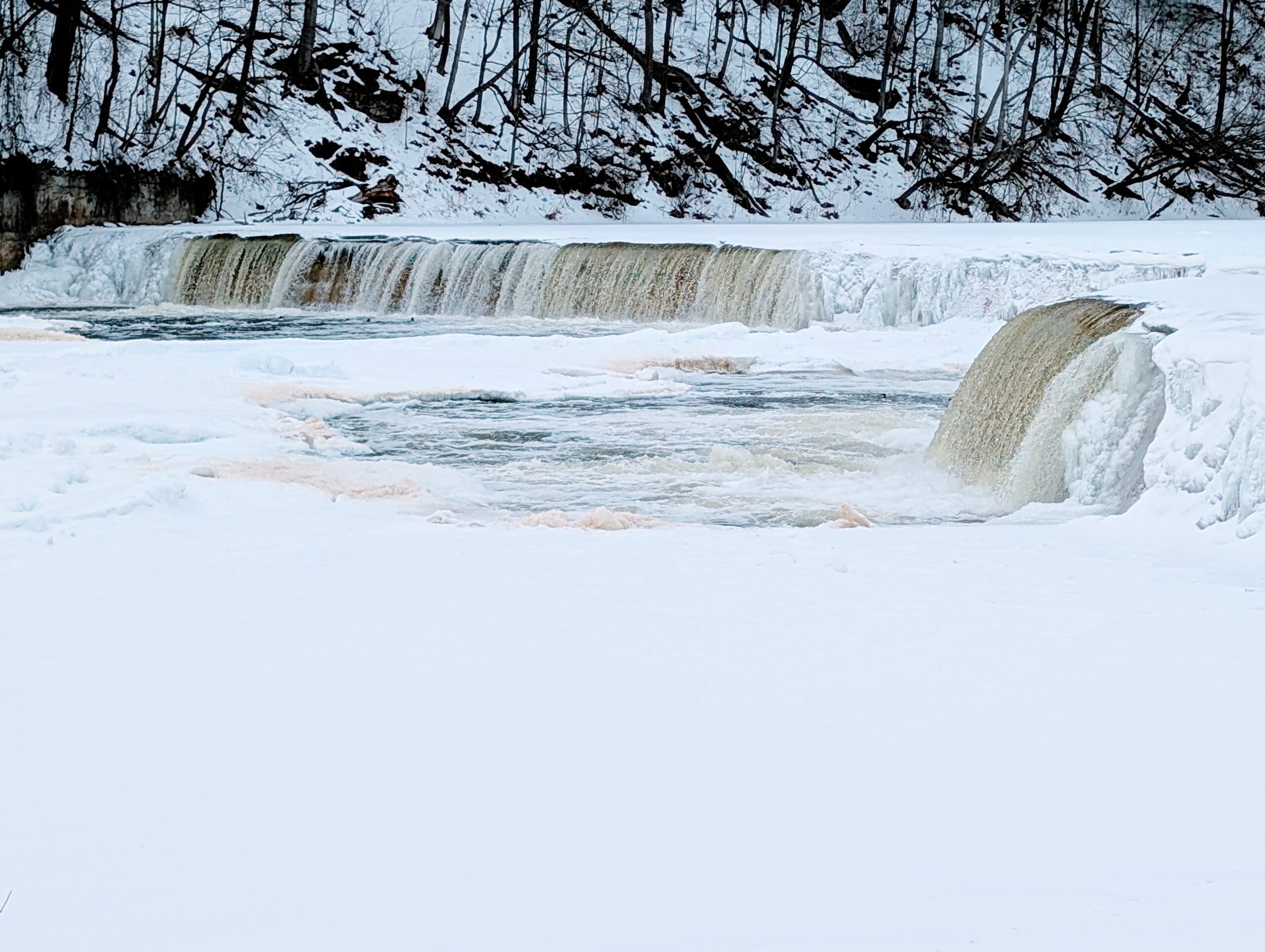
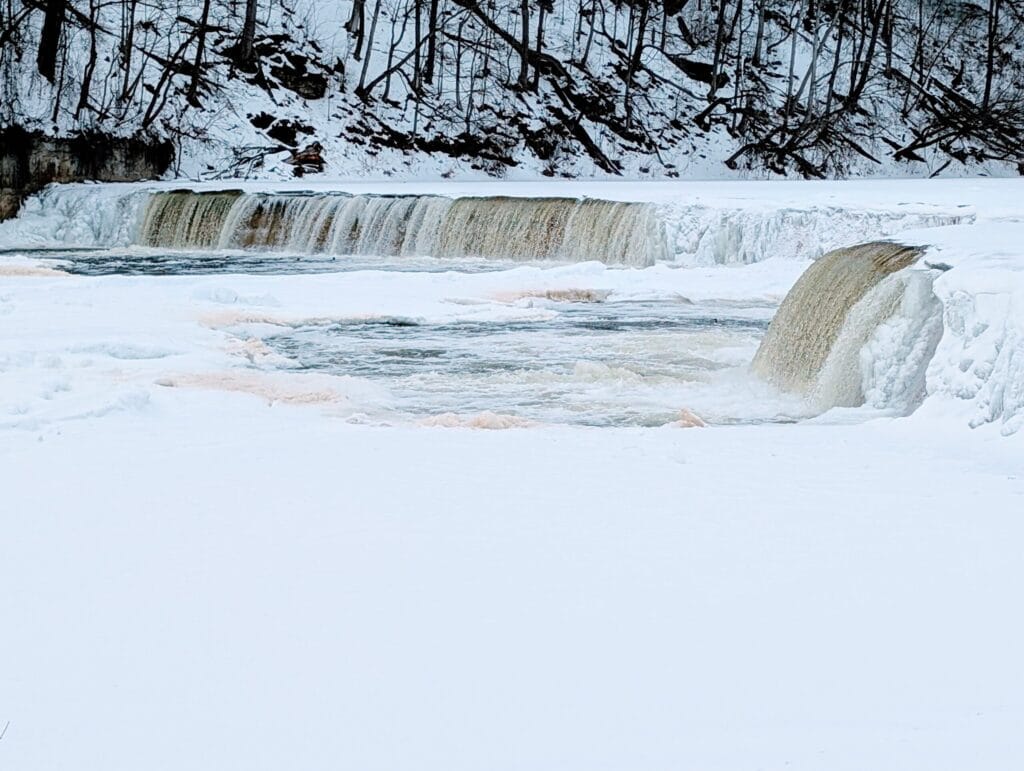
If you walk down to Penman’s Dam in Paris right now, the Grand River looks asleep. The water is locked under a thick sheet of ice, and the roar of the dam is muffled to a low rumble. It’s a beautiful, peaceful winter scene.
But as any river guide will tell you, this silence is deceptive.
With warmer temperatures in the forecast this week, we are approaching the most dynamic and violent time of the river’s year: The Ice Out.
It’s Not Just Melting; It’s Moving
When people think of a thaw, they imagine ice cubes melting in a glass—a slow, gradual disappearance. That is not how a river works.
The Grand River doesn’t just melt; it breaks.
- The Lift: As the warm weather melts the snow in the fields upstream, thousands of gallons of runoff pour into the river channel. This rising water pressure pushes up against the ice sheet from below.
- The Fracture: The ice, which is rigid, can’t bend with the rising water. It cracks. If you stand near the banks (from a safe distance), you can actually hear the river “groaning” and popping as the pressure builds.
- The Shove: Once the sheet breaks, the current catches it. Massive slabs of ice—some weighing as much as a pickup truck—are hurled downstream.
The Danger of the “Pinch Point”
This is where landmarks like Penman’s Dam and the bridges in Brantford become critical. These are “pinch points.”
When the moving ice hits a restriction or a slow spot, it piles up. This is an Ice Jam. Within minutes, an ice jam can act like a temporary dam, causing water levels behind it to rise rapidly—sometimes by meters in less than an hour.
This is why we constantly warn: Stay off the ice.
The surface might look solid, but the hydraulic pressure underneath is immense. A shelf of ice that was stable at 9:00 AM could be heaving and breaking apart by noon.
Nature’s Spring Cleaning
While dangerous, this process is necessary. The “scouring” action of the ice clears out the sediment and debris from the river bottom. It carves out the deep channels and pools that the Smallmouth Bass will use for spawning in a few months.
It is the river hitting the “reset” button for the upcoming season.
Watch from the Banks, Paddle in the Spring
We spend our winters monitoring these conditions so that when we open for the season, we know exactly how the river has changed.
For now, enjoy the power of the river from the safety of the high banks or the lookout points in Paris. It’s a spectacular show—as long as you respect the physics behind it.
Dreaming of open water?
The ice will clear soon enough. Check out our 2026 Guided Trip Calendar and book your spot for when the waters are flowing free again.